


what pastors can learn from steve jobs without becoming steve jobs. (part five.)

When Steve Jobs returned to Apple in 1997, the company was 90 days away from bankruptcy. Michael Dell said that if he were in charge, he’d sell Apple and return the money to the shareholders. But Steve Jobs had a clear vision for the company’s future that included selling a stake in the company to longtime rival Microsoft. The move was met with cynicism and distrust from the Apple faithful. But Apple needed cash (and maybe more importantly, Microsoft Office for Mac)…fast. So Bill Gates swept in as the savior, practically gloating at the great Steve Jobs needing his help. But 13 years later, Apple’s market capitalization would surpass even Microsoft’s as Apple’s series of successful product launches not only saved it from bankruptcy but set it on the path for one of the greatest business comeback stories ever.
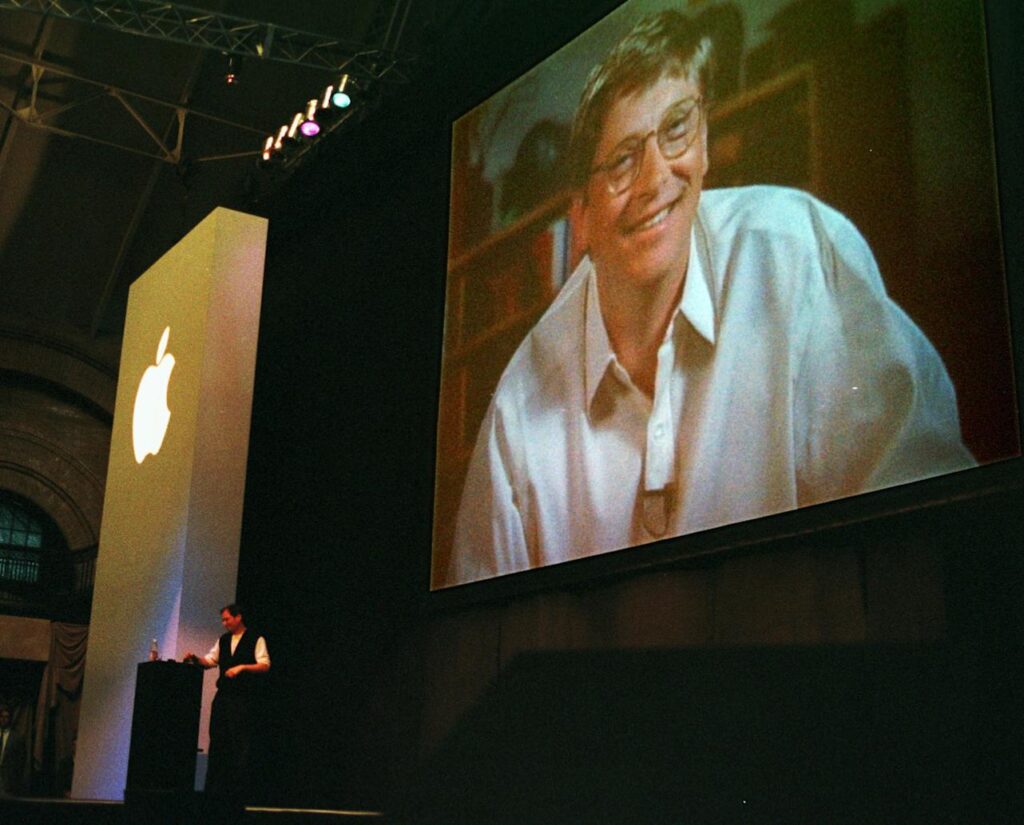
It was upon this occasion that Steve Jobs sent one of the most revealing emails of his career on May 26, 2010. The subject line was just: “Today.” Not “We Did It.” Not “Take That, Bill Gates.” Not a chest-thumping TED Talk. Just “Today.” In the email, Jobs acknowledged the milestone, reminded employees that “stocks go up and down,” and then reached for a quote from one of my other favorite visionaries, Walt Disney: “We’re only as good as our next picture.” Then he translated it for Apple: “We’re only as good as our next amazing new product.” And then, with elite brevity, he ended with: “Back to work.”
That Disney quote matters more than it first appears.
Walt’s line came from a moment when he was being honored, and instead of soaking in the applause as a man conquering Hollywood as he had done, he basically said, “Thanks, but we’ve got too much future ahead of us to let this go to our heads.” His point was simple: in a creative field, yesterday’s success has the ages like milk. You can celebrate it, sure, but you cannot live on it. The next thing still has to be made. The next thing still has to matter.
Jobs knew exactly why that line mattered. Apple had not won because it spent all day staring at Microsoft through binoculars. Apple won because it obsessed over making great products. That is what made the email so sharp. He did not define Apple by who they had beaten. He defined Apple by what they still had to build.
Pastors, there is a message in that for us.
A lot of churches are quietly building their identity in reaction to somebody else’s church. The church down the street. The fast-growing church across town. The mega church online with drone shots, perfect lighting, and thousands of followers on social media. We say we are focused on mission, but sometimes that mission looks like keeping up with the Jones’s.
And comparison is sneaky. It rarely walks in wearing a villain cape. It shows up dressed as “vision.” It sounds like, “Why aren’t we growing like them?” “Why doesn’t our lobby feel like that?” “Why isn’t our online presence sharper?” “Why doesn’t our worship music sound bigger?” It’s the ideas we pick up at a conference. Before long, we are no longer asking what God has uniquely called our church to do well. We are asking how to become a TEMU version of somebody else’s ministry.
That is how churches lose their voice.

The Walt Disney quote exposes the trap. Disney was not saying, “Ignore excellence.” He was saying, “Don’t let yesterday’s applause make you lazy.” Jobs was not saying, “Ignore the competition.” He was saying, “Don’t let the competition define you.” And for pastors, that lands right between the eyes. Your church is not called to out-perform the church down the street. You are not called to out-brand the church with the bigger budget, the larger staff, or the pastor who somehow looks relaxed during Easter week. You are called to steward your next “picture.” Your “next amazing product.” Your next sermon. Your next volunteer culture decision. Your next first-time guest. Your next prayer gathering. Your next discipleship step. Your next act of faithfulness.
Because churches drift when they become obsessed with their rival’s scoreboard. But they get healthy when they become obsessed with obedience to their own calling.
So celebrate what God is doing elsewhere. Learn from strong churches. Borrow good ideas with a clean conscience. But do not compare your way into an identity crisis. Filter it all through what God has uniquely called and equipped you to do.
The church down the street is not Microsoft, and your job is not to beat them.
Your job is to know what your church does well, do it with excellence, keep doing the next faithful thing, and then, in the holiest possible sense, “get back to work.”
dc.

