

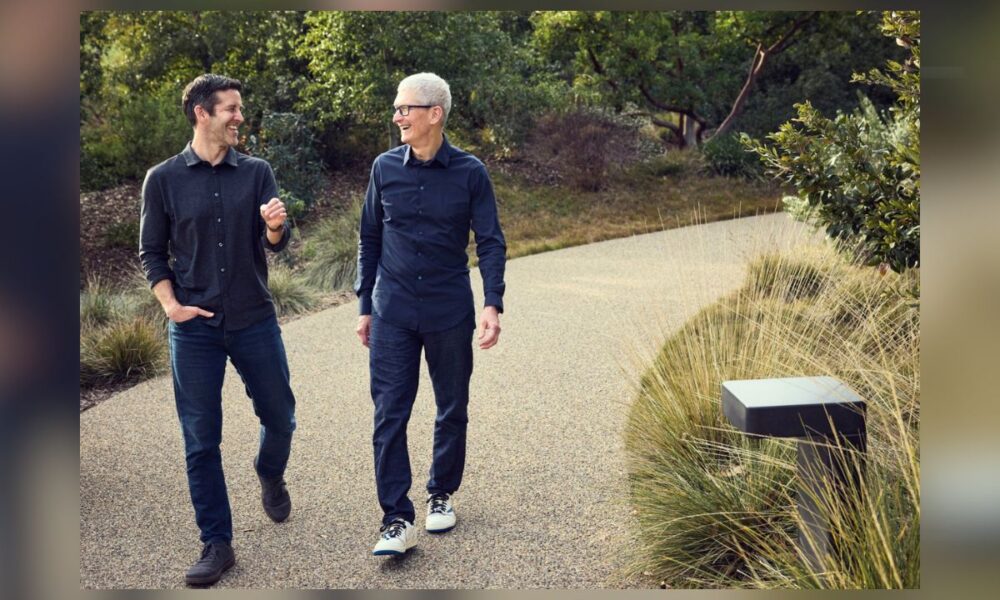
Tim Cook is stepping out of Apple’s CEO role after 15 years in the big chair, with John Ternus set to take over this September. It marks the end of a massive era for Apple, and the beginning of whatever comes next.
Long before Cook was CEO, back when he was still in his first couple of years at Apple, I got to spend a day with him at 1 Infinite Loop during new employee orientation. At the time, Apple had a pretty wild practice: senior vice presidents rotated through and took a class of new employees through training. I happened to land in a group where Tim Cook spent real time with us, and I remember being struck by him immediately.
He wasn’t flashy. He wasn’t trying to work the room. He didn’t have that performative executive fog machine thing some leaders love to roll out. He was soft-spoken, calm, and very clearly in command. The guy had quiet confidence. Not fake humility. Not borrowed swagger. Just the kind of steadiness that makes you think, “Yeah, this man probably knows where all the bodies, spreadsheets, and shipping containers are buried.”
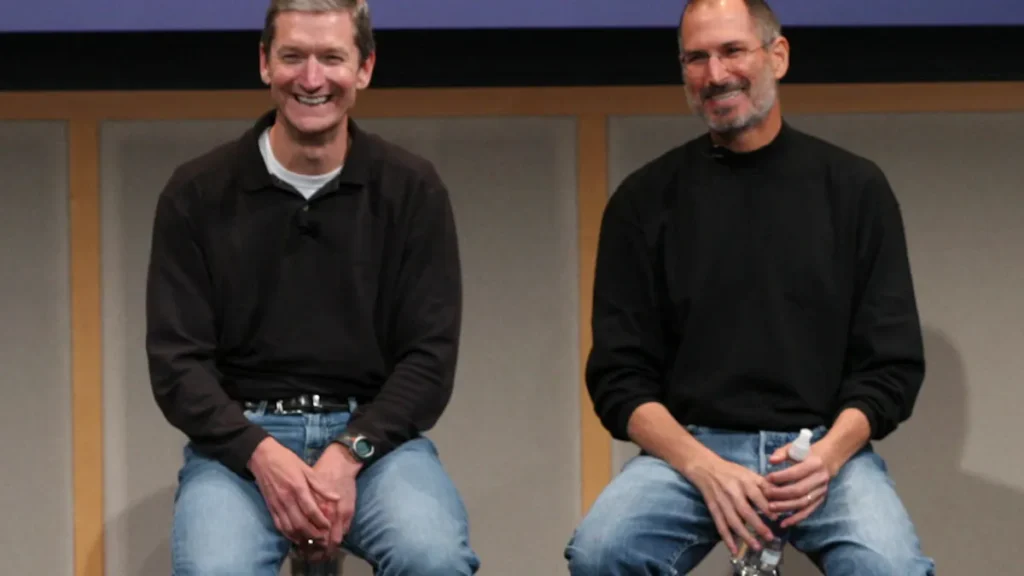
And that matters, because when Tim Cook came to Apple in 1998, Apple was not exactly the cultural touchstone it is today. The company was hanging on by its fingernails. Cook had a secure job at Compaq, one of the biggest PC companies in the world, and Apple looked like a career risk wrapped in a financial dumpster fire. In his 2014 Charlie Rose interview, Cook said he had turned Apple down multiple times before finally deciding to take a meeting because, as he put it, Steve Jobs “created the whole industry that I’m in.” That meeting changed everything.
What hooked him was not safety. It was vision.
Cook said Jobs started laying out his strategy, describing a radically different path for Apple, including the consumer focus that would help produce the iMac. Cook said he had always believed “following the herd was not a good thing,” and what Jobs was doing felt totally different. That was enough. He was in.
That’s the first lesson for church leaders.
Vision can pull people farther than security ever will.
A compelling vision, clearly articulated by a competent leader, can make smart people walk away from comfort. That’s what happened with Tim Cook. He left the safe, sensible route because he got around a leader who could actually see something. Jobs wasn’t selling stability. He was selling a future.
Church leaders do this backwards all the time.
Some church leaders look for a good salary, benefits, and a church that isn’t on fire. And sure, those things matter. Nobody’s out here praying to find a toxic church culture, that doesn’t pay enough to cover the bills, and a copier from 1996. But strong leaders are also drawn to conviction. They want to know where this thing is going. They want to know what problem you believe God has called your church to solve. They want to know if your vision is real, or just a statement posted on the wall.
Security matters. But vision still recruits.
Then there’s the second lesson.
Vision without systems is just inspirational clutter.
Everybody remembers Steve Jobs. The black mock turtleneck. The product launches. The reality distortion field. The whole “Think Different” era. And yes, that campaign mattered. It gave Apple an identity before it fully had a comeback. It was more than marketing. It was a declaration of who Apple believed it was. The company wasn’t just selling computers. It was inviting people to join a tribe of rebels, artists, weirdos, and world-changers.
But slogans don’t save companies by themselves.
Behind the famous whiteboard quadrant, behind the Bondi Blue iMac, behind the cool ads and Lee Clow genius and Jony Ive design magic, there had to be an operating system for the business itself. Tim Cook built a huge part of that. He helped slash Apple’s supplier count, cut inventory dramatically, leaned into contract manufacturing, and became famous for treating inventory like spoiled milk because tech products lose value fast. His whole operating instinct was speed, efficiency, leverage, and discipline.
That’s not sexy. It’s just necessary.
Church leaders love to talk about vision. We put it on walls, websites, stage graphics, coffee mugs, and t-shirts that people only wear when they’re painting. But vision by itself only gets you so far. Eventually, every ministry crashes into the ceiling of its systems.
You can have a beautiful mission statement and still have a volunteer pipeline held together with vibes and text messages.
You can preach big faith and still have zero follow-up process for new families.
You can talk about discipleship all day and still have no clear path for helping people actually grow.

That’s where Tim Cook is such a useful case study. He was not the visionary showman. He was the builder of structure. He was the guy who made the bold idea executable. He created the operational muscle that allowed Apple to move fast when it mattered most. And later, as CEO, he turned that discipline into one of the most valuable companies on earth growing by roughly $3.6 trillion during Cook’s tenure.
That’s the point for pastors.
Some leaders are Steve Jobs leaders. They see around corners. They cast vision. They provoke movement.
Some leaders are Tim Cook leaders. They build systems. They remove friction. They create repeatability, clarity, and scale.
Healthy churches need both. Because eventually, every God-given vision needs a calendar, a workflow, a budget, a team lead, a training path, and somebody who knows why the kids check-in printer still isn’t working.
Tim Cook was the right leader for Apple after Steve Jobs because Apple didn’t just need more ideas. It needed structure sturdy enough to carry the ideas it already had.
Churches trying to make more and better disciples should pay attention.
Because sometimes the most spiritual thing you can do is not dream bigger.
It’s build better.
dc.

