



In honor of today’s final round of The 2026 Master’s, I’m thinking about how Augusta National Golf Club and The Walt Disney Company are similar, and what we as church leaders can glean from them.
Here’s the thing: both Disney and Augusta National understand something a lot of churches still haven’t figured out: Magic is usually just competence and execution of details.
One gives you castles, parades, and anthropomorphic animals. The other gives you azaleas, pimento cheese, and a golf tournament so clean it feels like the earth itself got a haircut. Different vibe, same playbook. And that playbook has a lot to teach church leaders.
Because whether you’re trying to create a world class guest experience at Magic Kingdom or a reverent, polished tournament at Augusta, the goal is not just to impress people but to remove distractions, build trust, and create an environment where people can actually pay attention to what matters.
Churches should care about this deeply. Not because we’re trying to become Disney or Augusta, but because too many churches still think “spiritual” means “we don’t have to be thoughtful.” As if the Holy Spirit’s favorite working conditions are confusing parking, bad signage, awkward check-in, feedback in the lobby speakers, and a strange smell emanating from the lobby restrooms.
Here are a few things I see at both Disney and Augusta, and what church leaders should steal immediately.
1. Hide the machinery
Disney hides the backstage. Augusta hides the operational chaos. In both cases, the guest gets the experience, not the stress fracture underneath it.
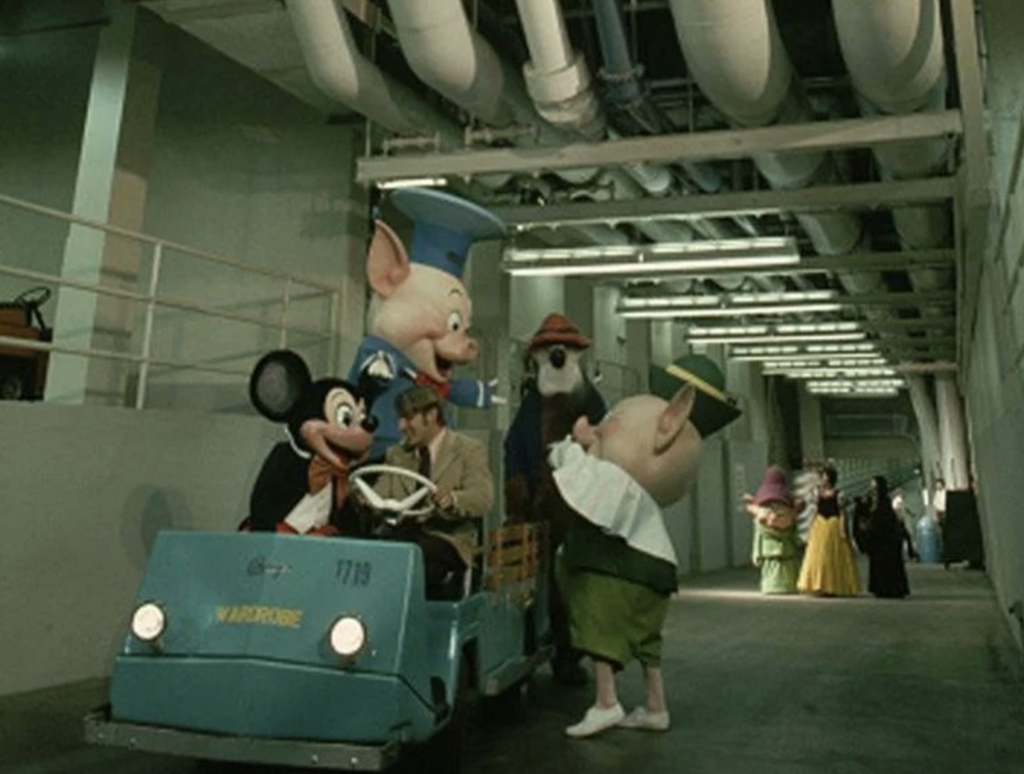
For example, Disney famously has what they call “Utilidors” at Walt Disney World. These underground tunnels allow cast members, supplies, and trash to move across the park without breaking the illusion of magic that the guest experiences.
But did you know that Augusta National also has underground facilities that directly impact the guest experience? Augusta has an underground tunnel that allows staff, maintenance and players to move between areas easily and out of sight of the TV cameras and the guests.
Augusta also employs a system called “SubAir,” an underground network of pipes and blowers beneath the greens. It can either push air to promote growth or pull moisture out to firm up the surfaces. This allows Augusta to shape course conditions below ground and out of sight.
What do underground tunnels have to do with church leadership? Stop making guests feel your internal mess. They should not walk in and immediately sense:
- “We’re short on volunteers.”
- “Our kids check-in is being weird today.”
- “The pastor must have fought with his wife on the way to church this morning.”
- “Our lobby is basically a yard sale with a coffee urn.”
Guests should experience calm, clarity, and confidence. Even if backstage you are one unplanned ProPresenter software update away from Armageddon.
This does not mean being fake. It means being prepared.
Your service should feel like someone actually thought about what it’s like to be new here. Clean up the visual clutter. Simplify your signage. Keep volunteer conversations from turning into staff therapy sessions in public spaces. Solve problems before they become part of the guest experience.
The church lobby should not feel like people wandered into the trading floor of the New York Stock Exchange.
2. Remove friction
This is where Disney and Augusta both absolutely kill it.
Disney removes friction with hidden systems, clear pathways, and relentless operational design. Augusta removes friction with free parking, simple concessions, and a phone-free environment that keeps people present.

Did you know that a Pimento cheese sandwich at The 2026 Master’s is only $1.50? That’s bonkers. But the price, the simplicity, the nostalgia, the tradition, all add up to a guest experience unmatched in professional sports.
Churches, meanwhile, create a series of escape rooms for guests to navigate to find parking, check their kids in, find a restroom, get coffee and find a seat.
If people have to ask six questions before they sit down, your process is broken.
- How do I park?
- Where do my kids go?
- Where’s the bathroom?
- What if I need help?
- Do I stand here?
- Is this seat taken?
- Why is no one acknowledging that I am clearly new and mildly panicked?
Friction disciples people too. It just disciples them toward leaving.
You do not need a massive budget to fix this. You need empathy and a clipboard. Walk your campus like a first-time guest. Better yet, bring someone who does not know the system and watch where they get stuck. That’s your discipleship opportunity, not because the parking lot is sacred, but because confusion is expensive. Every unnecessary barrier steals attention from what actually matters – and attention is gold.
3. Protect the atmosphere

Disney protects the show. Augusta protects the mood. Both understand that atmosphere is fragile. For many church leaders, atmosphere is a luxury reserved for mega-churches with mega-budgets. it’s not. The room is already preaching before the sermon starts.
Your lighting preaches. Your transitions preach. Your stage clutter preaches. Your volunteer energy preaches. The way your team handles a problem in the lobby definitely preaches.
If your church says, “We want people to encounter Jesus,” but the environment says, “Welcome to a disorganized school assembly,” those messages are fighting each other in the parking lot, and my money is on the school assembly winning.
I’m not arguing for slickness. I’m arguing for intentionality.
There is a difference between humble and sloppy. One is a virtue. The other is a lack of planning wearing a youth pastor hoodie.
Protecting the atmosphere might mean training your hosts to escort people instead of pointing vaguely. It might mean making sure your stage doesn’t look like a Guitar Center exploded. It might mean tightening service transitions so the whole experience feels confident instead of a free-for-all.
A lot of churches don’t need more creativity. They need fewer unforced errors.
4. Train people as experience-makers, not warm bodies
Disney calls them cast members. Augusta trains workers to contribute to a polished patron experience. Both understand that people are not just filling positions. They are the experience.
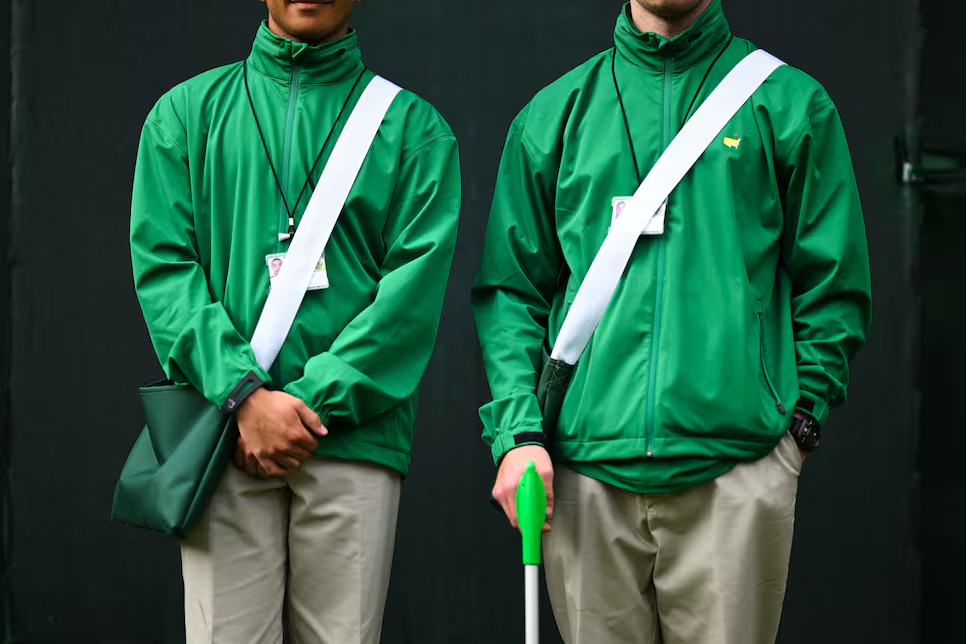
Winners of The Master’s are famously awarded green jackets, but they’re not the only ones in green. The Master’s hires and trains thousands of employees who also wear green jackets, making green jackets a symbol of belonging to the Club.
Churches love volunteers. Churches also sometimes deploy volunteers like a man throwing silverware into a drawer.
“Great, you’re breathing. Here’s a lanyard.” No. Train people.
- Your parking greeter is not just moving cars. They are lowering anxiety.
- Your kids check-in host is not just scanning labels. They are building trust with parents.
- Your usher is not just handing out programs. They are shaping whether a guest feels seen or invisible.
- Your tech team is not just pushing buttons. They are removing distractions so people can engage.
- The ministry job is not to “fill the slot.” It is to “shape the moment.”
That changes how you recruit, onboard, coach, and celebrate volunteers. Stop acting like hospitality is less spiritual than preaching. Some people will hear the sermon better because someone smiled in the parking lot like they actually meant it, and that matters.
5. Sweat the boring stuff
This might be the most important one.

Both Disney and Augusta know that magic lives in details most people would call boring. Clean bathrooms. Clear paths. Maintained spaces. Operational consistency. Tiny repairs no one notices because that’s the whole point.
Church leaders often want the platform moments without the systems beneath them. We want revival, but we also want to ignore the broken bathroom lock, the dead lobby plant, the dusty baseboards, the confusing signage, and that pile of I-don’t-even-know-what sitting in the corner of the room. But people experience all of it.
Excellence is not about being fancy. It is about reducing distraction and increasing trust. When a church is cared for, people feel cared for.
And no, the answer is not “Well, we’re here for Jesus, not for appearances.” That sounds spiritual until you realize the Bible spends a lot of time giving very specific instructions about environments, preparation, order, and beauty. Apparently details were not beneath God.
The best churches are not the ones trying to be Disney or Augusta. They are the ones wise enough to learn from both. So here’s a recap:
- Hide the machinery.
- Remove friction.
- Protect the atmosphere.
- Train your people.
- Sweat the boring stuff.
Because church should not feel fake. But it also should not feel careless. And sometimes the most spiritual thing you can do is make it easier for people to notice Jesus than your chaos.
dc.

